
Website launch checklist
Building a modern website involves more than just picking a template, pasting texts, and hitting “publish”. It requires a strategic balance between technical infrastructure and high‑quality content. To ensure your digital presence is fast, secure, and effective, you need to understand the fundamental building blocks that make up a successful site.
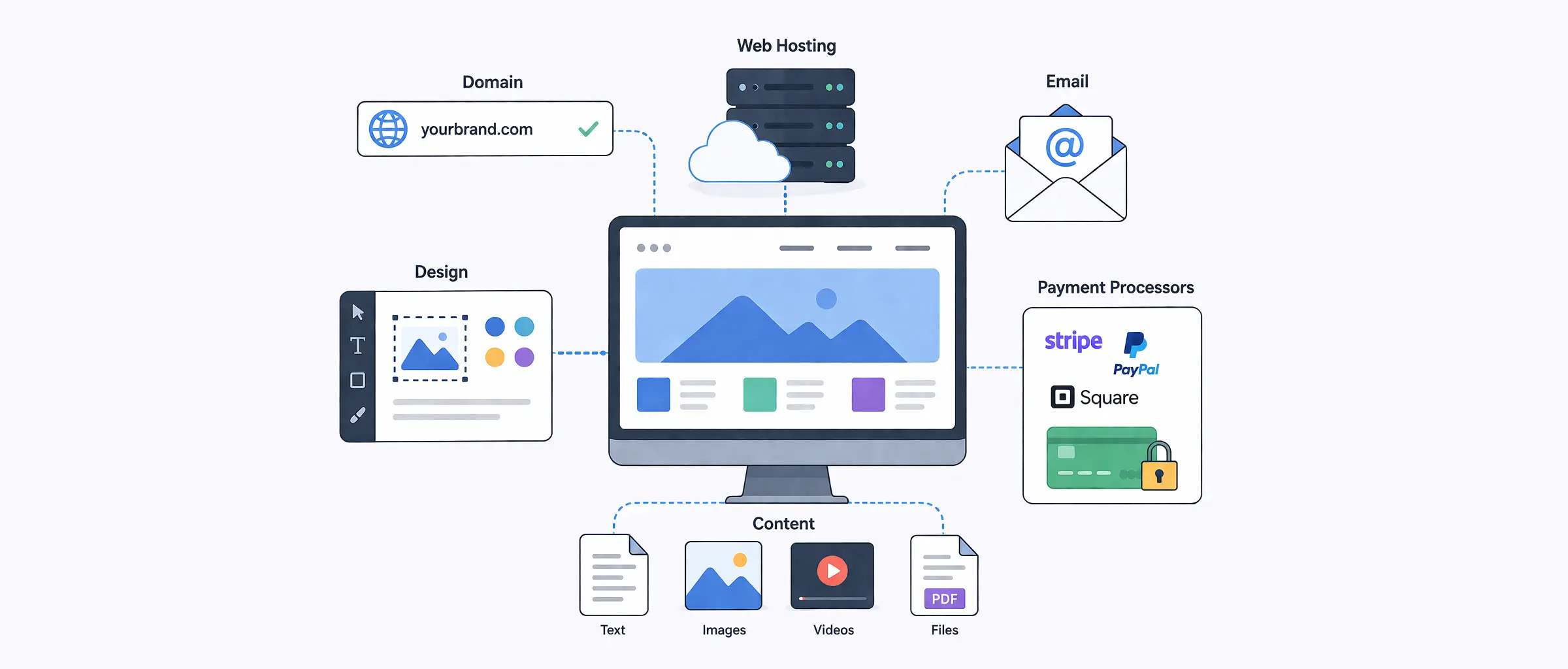
A modern website is not a single system, but a combination of services. Here is a breakdown of the essential requirements for launching a professional website.
Domain name
Domain name is your unique identity on the internet. It serves as your digital address and is often the first impression a user has of your brand. A well‑chosen domain should be short, memorable and relevant to your business, ideally using a .com or a local extension to establish geographical relevance.
Web hosting
Hosting is the physical space on a server where your website’s files and databases are stored. Choosing a high‑performance hosting provider is critical because it directly impacts your site’s loading times, security, and uptime. Investing in quality hosting ensures that your site remains accessible and responsive even during traffic spikes.
Professional email server
Using a professional email address linked to your domain, such as [email protected], is vital for business credibility. It separates your professional communications from personal ones and builds trust with clients and partners. Most hosting plans include email services, but dedicated enterprise solutions offer better deliverability and security features.
Payment processors
For businesses that sell products, apart from building e-commerce website, they require a secure payment gateway. This is the bridge between company’s website (online shop) and the banking system. Integrating reliable processors like Stripe or PayPal allows you to accept credit cards and digital payments safely. This infrastructure must be encrypted and compliant with financial security standards to protect both your company and your customers.
SSL Certificate
Security is a foundational requirement for any website, and an SSL certificate is what enables the “HTTPS” protocol. It encrypts the data sent between the user’s browser and your server, protecting sensitive information like login credentials or contact form data. Additionally, search engines prioritize secure websites, making it a key factor for your online visibility.
Content
A logical page structure ensures that users can navigate your site intuitively without getting lost. This involves organizing content into a clear hierarchy to improve the User Experience (UX). A well-structured site not only helps visitors find information faster but also helps search engine crawlers understand and index your pages more effectively.
Copywriting is the art of using words to guide, inform, and persuade your visitors. Your content needs to be clear and professional, as well as optimized for search engines (SEO) to ensure people can find you. Beyond just describing what you do, your copy should communicate your brand’s value proposition and encourage users to take action.
Visual identity, design and assets
Web design is the visual language of your brand, encompassing everything from your logo and color palette to typography. A professional design ensures that your website looks modern and trustworthy across all devices. Whether you decide to have a custom‑coded solution or a highly optimized theme, the visual elements must be consistent to reinforce your brand identity.
The imagery used on your website, like photographs, icons, illustrations, etc., play a major role in user engagement. High‑resolution, professional visuals help break up long blocks of text and make the site more appealing. Using original photos of your work or team creates a level of authenticity that generic stock photos simply cannot match.
Content Delivery Network (CDN)
A CDN is a network of servers distributed globally that stores cached versions of your website. When a user visits your site, the CDN serves the content from the server closest to them, significantly reducing latency. This is an essential requirement for maintaining high performance and ensuring a seamless experience for visitors regardless of their location.
In addition to performance improvements, many CDN providers also offer basic security features like DDoS protection and firewall rules.
Need help with your website launch?
If this checklist feels overwhelming, that’s completely normal. A modern website involves multiple systems that need to be configured and aligned correctly. Instead of trying to piece everything together on your own, working with an experienced team ensures that every technical detail is handled properly from the start. That means fewer issues, faster launch times, and a website that performs reliably from day one.
If you need help setting up or launching your website, we’re here to help.